
Residential Blower Door
Thermal Envelope Testing
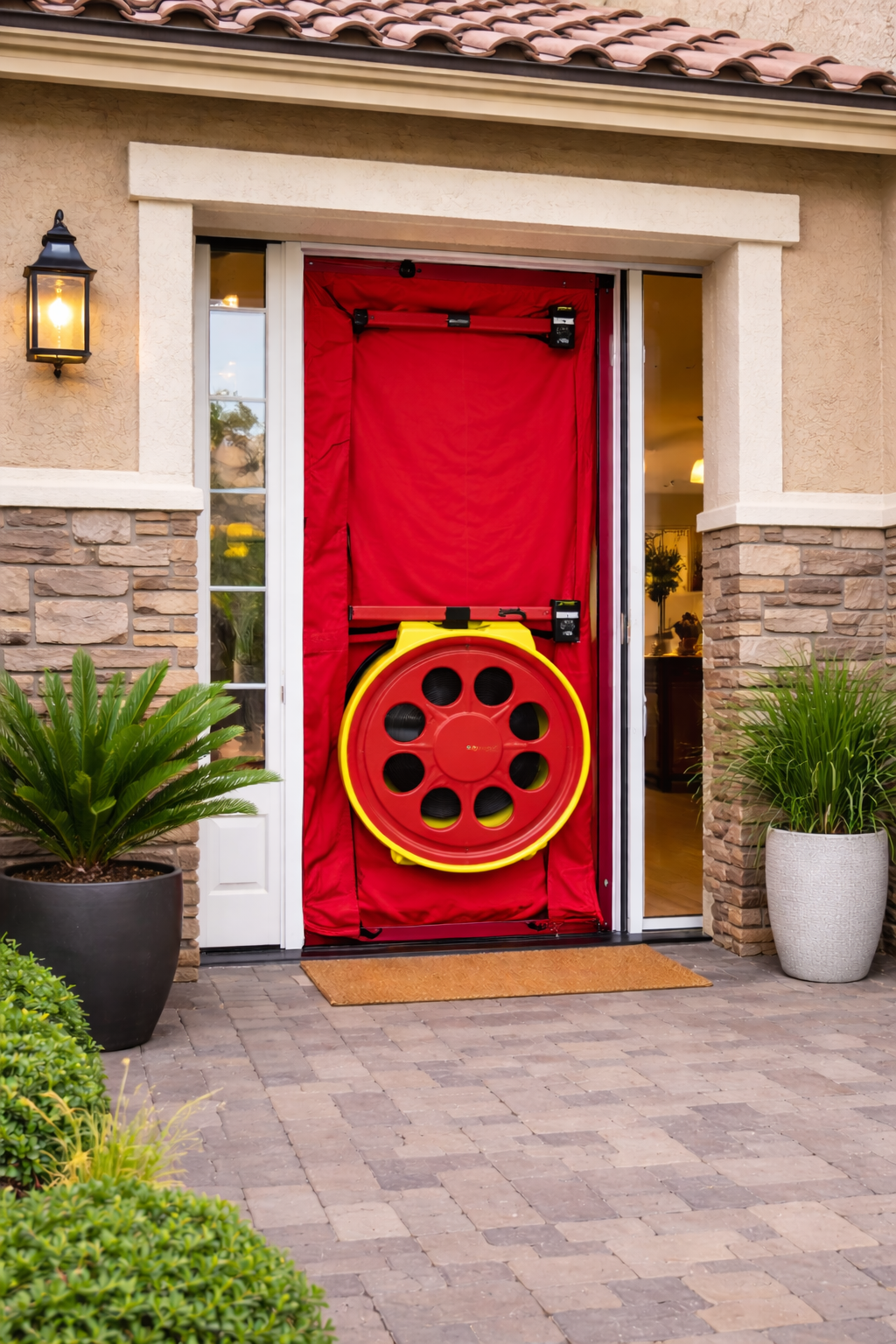
Residential blower door testing is used to measure how airtight a home is and to verify compliance with energy codes such as the IECC. A calibrated fan is temporarily installed in an exterior door, and the home is depressurized (typically to 50 Pascals) to measure how much air is leaking through the building envelope.
The primary result is reported as ACH50 (Air Changes per Hour at 50 Pascals), which indicates how many times the air inside the home is replaced in one hour under test conditions. Lower ACH50 values mean a tighter, more energy-efficient home. Most codes set maximum allowable leakage rates depending on climate zone.
During testing, technicians can also identify specific leakage locations—common areas include: around windows, doors, ceiling penetrations, top/bottom plates, electrical outlets, wall penetrations, plumbing penetrations, HVAC registers, and duct boots.
When paired with tools like theatrical fog or infrared cameras, the test becomes a powerful diagnostic to pinpoint and visually confirm air leaks.
Residential blower door testing not only ensures code compliance but also helps improve comfort, reduce energy bills, and prevent issues like drafts, dust infiltration, and moisture problems.